

Spider Veins vs. Varicose Veins: Causes and Treatment
Spider veins or varicose veins? Understand the differences, causes, symptoms, and modern treatment options for both conditions.
On this page
It's a familiar sight: fine red or blue lines tracing across the legs like a spider's web, so-called spider veins. At first glance, they seem harmless and are often treated as a purely cosmetic issue. But beneath the surface, they may signal a deeper weakness in the venous system, one that can progress to varicose veins over time. Varicose veins are more than a visual concern: they can cause heaviness, pain, and swelling, and in severe cases lead to complications like skin changes or venous ulcers.
This article walks you through the journey from spider veins to varicose veins: what sets them apart, what causes them, and when it's time to take action. Whether you're personally affected, noticing early changes, or simply want to understand your vein health better, this guide has you covered.
Key Takeaways
- Spider veins are small, superficial vessel dilations (CEAP C1), mostly cosmetic but potentially an early sign of venous weakness.
- Varicose veins are larger, dysfunctional veins (CEAP C2–C6) that can cause pain, swelling, and serious complications if untreated.
- Both share root causes: weakened vein valves, genetics, hormonal influences, sedentary lifestyle, and aging.
- Prevention through regular movement, vein exercises, compression, and a healthy weight is highly effective.
- Modern treatments range from minimally invasive sclerotherapy and laser to endovenous procedures, most without traditional surgery.
Definitions: Spider Veins vs. Varicose Veins
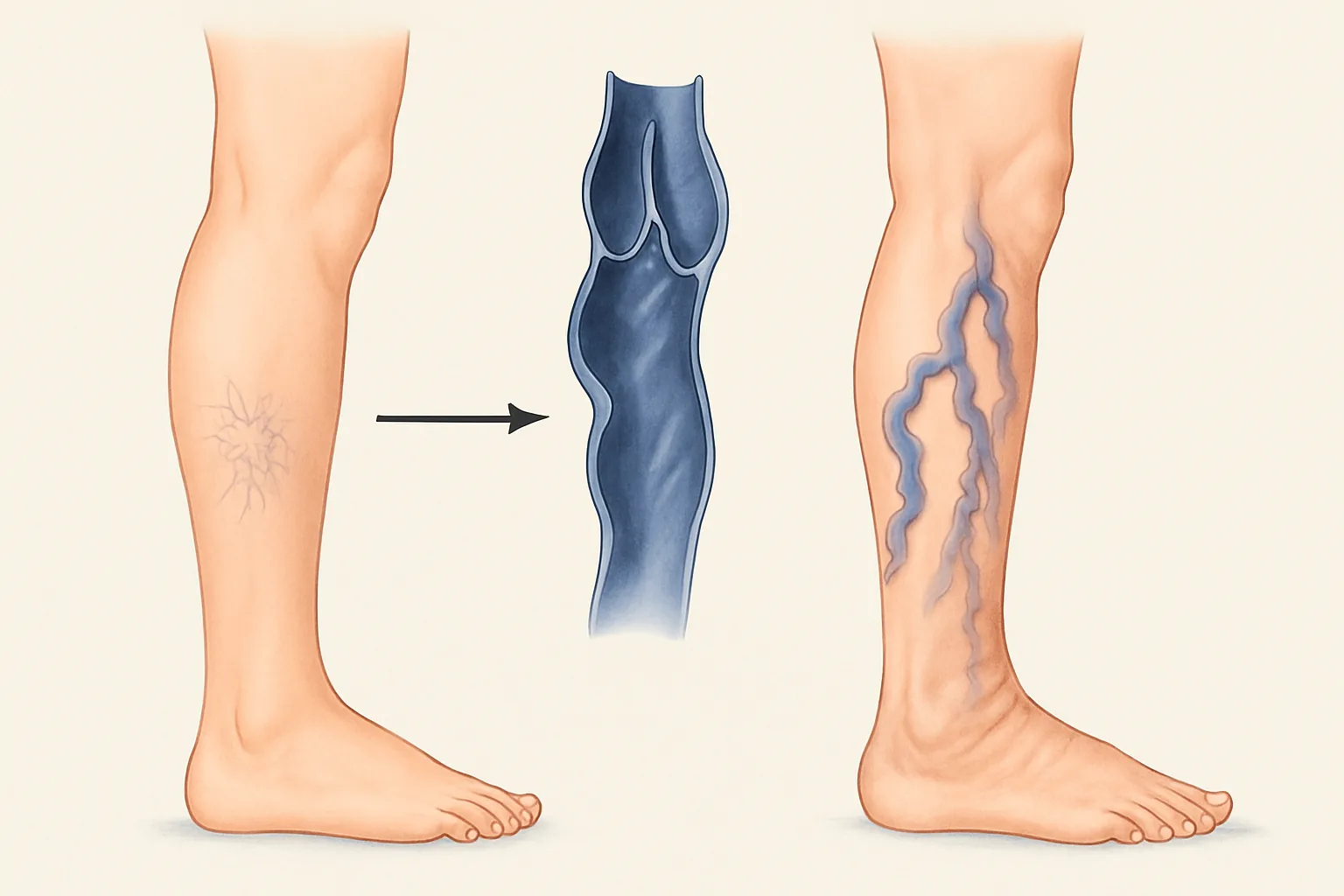
Spider veins are fine, reddish-blue dilations of the smallest skin veins, appearing as web-like or fan-shaped patterns just beneath the surface. In most cases, they're primarily an aesthetic concern without immediate health symptoms.
Varicose veins (varices) are permanently dilated, tortuous veins of the superficial venous system. They commonly appear on the legs and can cause functional symptoms like heaviness, tightness, swelling, or nighttime cramps. Left untreated, varicose veins can lead to skin changes, inflammation, or venous ulcers.
The functional difference in one sentence:
- Spider veins = very small, superficial vessels → primarily cosmetic.
- Varicose veins = larger, insufficient veins → with symptoms and potential health risks.
Medical classification (CEAP):
- Spider veins: typically C1 (telangiectasias / reticular veins).
- Varicose veins: C2 (visible/palpable varices) through C6, depending on complications like edema or skin changes.
Learn more in our dedicated guides:
Causes and Risk Factors
Both spider veins and varicose veins develop when vein valves weaken. These small "check valves" inside the veins normally ensure blood flows only toward the heart. When they become leaky, blood pools in the legs, pressure builds in the vessels, and the veins dilate permanently.
Common Causes
- Genetic predisposition: If parents or grandparents were affected, your risk increases significantly.
- Hormonal influences: Pregnancy, hormonal contraceptives, and menopause can weaken vessel walls.
- Aging: Vein elasticity naturally decreases over time.
- Lack of movement: Prolonged sitting or standing strains the venous pump.
- Excess weight: More pressure on the vessels promotes varicose vein development.
- Occupational factors: Jobs involving extended standing (hairdressers, retail) or sitting (office work) increase risk.
Everyday Risk Factors
Many of these causes can't be changed, genetics and aging are beyond our control. But others, like inactivity or excess weight, can be actively addressed. Even small changes like regular movement, vein exercises, or elevating the legs help reduce risk.
- Practical prevention tips: How to prevent varicose veins
- Effective at-home exercises: Vein exercises for healthier legs
Symptoms and Warning Signs
While spider veins rarely cause discomfort and are mainly a cosmetic issue, varicose veins can produce noticeable symptoms. Recognizing the signs early is key, what starts out harmless can develop into serious vein disease.
Typical Varicose Vein Symptoms
- Heaviness or tightness in the legs, especially in the evening
- Visibly twisted, protruding veins
- Pain or pressure when standing or sitting for long periods
- Swelling (edema) at the ankles and lower legs
- Nighttime leg cramps
- Itching or skin changes (discoloration, eczema)
Warning Signs of Progression
- Increasing swelling despite rest
- Brown discoloration of the skin at the ankles
- Inflammation or skin rashes
- Poorly healing wounds ("venous leg ulcer" / ulcus cruris)
When these signs appear, it's essential to see a vein specialist (phlebologist). Only an ultrasound examination (Doppler or duplex sonography) can determine whether you're dealing with simple spider veins or a deeper venous insufficiency.
Prevention and Self-Care
Even though genetic factors and aging can't be controlled, there's a lot you can do to keep your veins healthy and significantly reduce your risk.
Movement Is the Best Medicine
- Regular vein exercises: Simple movements like ankle circles, calf raises, or cycling while lying down strengthen the venous pump.
- Endurance activities like swimming, cycling, or brisk walking promote circulation and relieve leg veins.
- Stay active throughout the day: Take stairs instead of elevators, go for short walks during breaks, and stand up regularly after sitting.
Healthy Habits
- Elevate your legs: Several times a day for a few minutes to support blood return.
- Contrast showers: Alternating warm and cold water strengthens vessel walls.
- Stay hydrated: Adequate fluids keep blood flowing smoothly.
- Maintain a healthy weight: Every kilogram less relieves pressure on your veins.
Supportive Measures
- Compression stockings: Especially helpful during prolonged standing, sitting, or travel, a simple and effective way to prevent swelling.
- Regular check-ups: If vein problems run in your family, schedule periodic visits with a phlebologist.
Treatment Options
Treatment depends heavily on whether you're dealing with spider veins or varicose veins, and how severe the symptoms are. While spider veins are primarily removed for cosmetic reasons, treating varicose veins is often medically necessary.
Treating Spider Veins
- Sclerotherapy: A special agent is injected into the affected veins, bonding the vessel walls so the body absorbs them over time.
- Laser therapy: Laser light seals the fine vessels. Particularly suitable for very small, superficial spider veins.
- Combination approaches: Laser and sclerotherapy are often combined for optimal results.
Treating Varicose Veins
- Foam sclerotherapy: Also possible for larger veins.
- Endovenous procedures:
- Laser or radiofrequency therapy: Minimally invasive methods that close the vein from within.
- Mechanochemical ablation (MOCA): Combines catheter technique with sclerotherapy.
- Surgical procedures:
- CHIVA method: A conservative approach that aims to preserve vein function.
- Stripping: The traditional operation where the affected vein is removed.
- Follow-up care: After all procedures, wearing compression stockings and light movement are important for healing.
When Is Treatment Advisable?
- When spider veins cause aesthetic distress
- When symptoms like pain, swelling, or cramps are present
- When complications arise (skin changes, inflammation, venous ulcers)
For supportive daily measures, check out our vein exercise guide.
FAQ, Common Questions About Spider Veins and Varicose Veins
Are spider veins dangerous? Generally no, they're mainly cosmetic. However, they can indicate developing venous weakness.
When should I see a doctor for varicose veins? At the latest when you experience pain, swelling, skin changes, or open wounds. If vein problems run in your family, a check-up is worthwhile even without symptoms.
Can varicose veins be treated without surgery? Yes. Many minimally invasive methods, sclerotherapy, laser, radiofrequency, don't require traditional surgery. The best approach depends on the findings.
Does exercise help against spider veins and varicose veins? Absolutely. Regular movement activates the muscle pump and improves venous return. Swimming, cycling, and vein exercises are especially beneficial.
What role do compression stockings play? Compression stockings are a simple, effective measure to prevent swelling and relieve symptoms. They don't replace definitive treatment of varicose veins, but they're an excellent complement.
Can spider veins be prevented? Not entirely, genetic factors can't be changed. But an active lifestyle, healthy weight, and regular vein exercises can significantly reduce the risk.
The Bottom Line
The progression from spider veins to varicose veins is often gradual, but it underscores the importance of paying attention to your vein health. While spider veins are mainly cosmetic, varicose veins can lead to serious symptoms and complications. The earlier you act, the better you can prevent long-term damage.
In summary:
- Spider veins = small, superficial → usually harmless.
- Varicose veins = dilated, insufficient veins → can cause symptoms and health risks.
- Causes: genetics, hormones, inactivity, excess weight, aging.
- Prevention: movement, vein exercises, healthy lifestyle, compression stockings.
- Treatment: from sclerotherapy and laser to modern endovenous procedures.
Your veins deserve attention before problems escalate. Small changes in your daily routine can make a world of difference.
Sources and Further Reading
- Deutsche Gesellschaft für Phlebologie: https://www.phlebology.de
- Gesundheitsinformation.de (IQWiG): https://www.gesundheitsinformation.de/krampfadern.html
- Mayo Clinic, Varicose veins overview: https://www.mayoclinic.org/diseases-conditions/varicose-veins
- NHS UK, Varicose veins: https://www.nhs.uk/conditions/varicose-veins
- Deutsche Venen-Liga e.V.: https://www.venenliga.de
Your Next Step
Heavy, tired, or swollen legs? Take the free LEVANA Leg Check™ to get a structured assessment of your symptoms, no diagnosis, no cost. It helps you judge whether to have your legs checked by a doctor.
This article is for informational purposes only and does not replace medical advice.
Carefully researched by the LEVANA editorial team, supported by our advisory board for movement, nutrition and leg wellness. Meet the advisory board.