

Compression Stockings in Summer: How to Stay Cool
Think compression stockings are unbearable in summer? Discover breathable materials, the right compression class, and comfort tips for hot days.
On this page
When temperatures rise, compression stockings are usually the first thing to get left in the drawer. Most people assume they're too hot and uncomfortable for summer. But here's the truth: summer is exactly when your legs need compression the most.
Heat causes blood vessels to dilate, slowing venous return and encouraging fluid buildup. The result? Swollen, heavy, aching legs. Well-chosen compression stockings counteract this directly, supporting blood flow, preventing edema, and keeping your legs feeling lighter even on the hottest days.
This guide covers the best materials, compression classes, and practical tips to make compression comfortable all summer long.
Key Takeaways
- Summer heat dilates blood vessels and slows blood return, making compression more important, not less.
- Modern summer-weight compression stockings use breathable, moisture-wicking materials that stay cool in high temperatures.
- Compression class 1 (18–21 mmHg) is often sufficient for prevention; class 2 (23–32 mmHg) is standard for diagnosed vein conditions.
- Put stockings on first thing in the morning, before legs swell, and combine with regular movement for maximum effect.
- Light colors reflect heat better than dark tones, a simple trick that makes a real difference.
Why Compression Matters More in Summer
You might think: "It's too hot for compression stockings." But that's precisely when they're most valuable. In warm weather, your blood vessels expand, blood flows more slowly back to the heart, and pooling in the legs increases. The consequences: swelling, tension, pain, and tired, heavy legs.
Compression stockings work against this directly. Graduated pressure supports venous return, helps drain fluid from tissues, and prevents edema. They don't just relieve existing symptoms, they help prevent problems from developing in the first place, especially if you sit or stand for long periods.
Skipping compression in summer risks worsening symptoms or even accelerating chronic venous insufficiency. Bottom line: compression stockings are a key part of vein health year-round, as long as you choose the right model.
Best Materials for Warm Weather
The right material often determines whether your compression stockings feel comfortable or end up back in the drawer. Not every model is designed for high temperatures.
1. Cotton, Soft but Not Always Ideal
Cotton feels pleasant on the skin but absorbs and holds moisture. On hot days, this can feel damp and warm. If you prefer cotton in summer, look for blends with functional fibers that wick moisture faster.
2. Microfiber, Lightweight, Smooth, Fast-Drying
Microfiber is often the top summer choice: lightweight, elastic, breathable, and cool against the skin. It dries quickly, ideal if you wash your stockings daily. It's also gentle on sensitive skin.
3. High-Performance Functional Materials
Many manufacturers now offer advanced fibers optimized for warm weather. These summer compression stockings feature:
- Breathability for good air circulation
- Moisture-wicking to move sweat away from skin
- Cooling yarns for a fresh feel
- UV protection for outdoor activities
- Antibacterial coatings to prevent odor
Look for product labels like "Summer Quality," "Cool Yarn," "Active Fiber," "Clima Comfort," or "FreshFX."
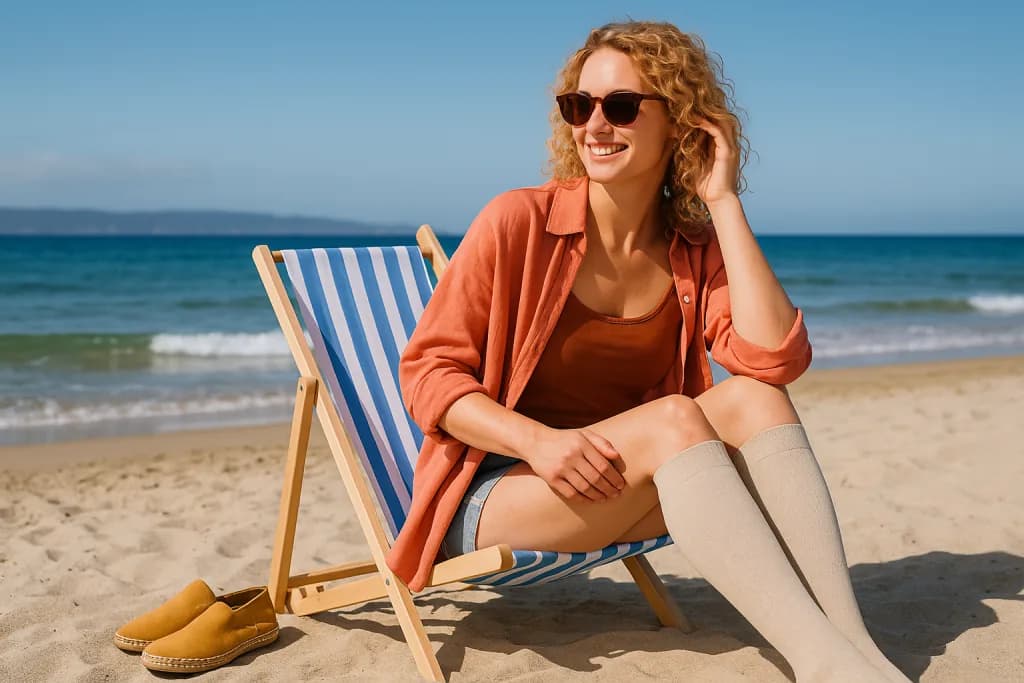
Pro tip: Choose light colors like beige, cream, or pastels, they reflect sunlight better than dark colors and stay noticeably cooler.
4. Knit Construction Matters
It's not just the material, the knitting technique also affects summer comfort. Finer-knit models are airier, thinner, and less insulating. Seamless construction helps avoid pressure points in the heat.
Choosing the Right Compression Class
Compression stockings vary by pressure level, measured in mmHg (millimeters of mercury). Choosing the right class ensures effectiveness without sacrificing comfort, especially important in summer.
Class 1, 18 to 21 mmHg
Light compression, ideal for early signs like tired or heavy legs, mild varicose veins, or prevention during travel or long office days. In summer, this is often the most comfortable option for people without severe vein issues.
Class 2, 23 to 32 mmHg
Moderate compression, recommended for diagnosed venous insufficiency or more pronounced varicose veins. Still wearable in summer with lightweight, breathable models.
Class 3, 34 to 46 mmHg
Strong compression, only for medical indications like severe lymphedema or post-surgical recovery. In summer, wear only when medically necessary, and prioritize materials with cooling and breathability features.
Class 4, Over 49 mmHg
Very rare, used only for specific conditions under medical supervision. Not relevant for everyday summer wear.
Finding Your Ideal Compression Class
- For mild symptoms or prevention, class 1 is often enough.
- For diagnosed vein problems, class 2 is the standard.
- Without a medical need, support stockings with light pressure (15–20 mmHg) can be a good summer option.
Tip: Get measured at a medical supply store in the morning, before your legs swell, for the best all-day fit.
Everyday Comfort Tips
Compression stockings can absolutely be comfortable in summer. A few simple habits make all the difference.
1. Put Them On in the Morning
Put your stockings on right after getting up, when your legs aren't yet swollen. They'll be easier to pull on and work more effectively from the start. The longer you wait, the harder it gets, especially in warm weather.
2. Use Donning Aids
If pulling on stockings is a struggle, try donning gloves, slide-on devices, or metal frames. These protect both your hands and the material, especially important with delicate summer-weight fabrics.
3. Wash Them Properly
Wash stockings daily, either by hand or on a gentle cycle at max 40°C (104°F). Use a mild detergent without fabric softener, softener destroys elastic fibers. Air dry and avoid direct sunlight or the tumble dryer.
4. Plan Smart Breaks
On extremely hot days, you can remove stockings for an hour or two, while resting in the shade or swimming. Just make sure to move or elevate your legs before putting them back on.
5. Dress Around Them
Pair your summer compression stockings with loose clothing and breathable shoes. Light colors reflect heat and help you stay cooler overall.
Recommended Summer Compression Models
Mediven Cotton CCL 2 Knee-High
- Skin-friendly cotton blend with moisture-regulating properties.
- Compression class 2 (23–32 mmHg), ideal for moderate symptoms.
- Soft, quick-drying, even with daily washing.
Summer tip: Great when you need stronger compression despite the heat.
Medi Circaid Compression Sock
- Light to moderate compression (class 1–2) in a short-cut design.
- Breathable material with UV protection, perfect for open shoes or sandals.
- Supports circulation without heat buildup.
Summer tip: Ideal for outdoor days or warm office environments.
Sockwell Full Floral Compression Sock
- Lightweight nylon/spandex blend with gentle graduation (15–20 mmHg).
- Stylish design with breathable, light fabric.
- More of a support stocking, ideal for mild symptoms or prevention.
Summer tip: Perfect if style and comfort are equally important to you.
Unisex Summer Compression Stocking (Class 2)
- Thin, breathable functional material at a budget-friendly price.
- Suitable for travel, long workdays, or outdoor sports.
- Reliable compression without excessive heat buildup.
Why These Models Work in Summer
- Material: Microfiber, functional yarns, or light cotton blends provide breathability and moisture management.
- Cut: Knee-highs or short socks prevent overheating.
- Pressure level: Light to moderate compression classes are more comfortable in heat.
- Design: Modern, fashionable options integrate easily into summer outfits.
Compression + Movement: Your Best Summer Strategy
Even the best compression stockings reach their full potential only when combined with movement. The reason: your calf muscles act as a pump that drives venous blood back toward the heart. Compression provides the external support, but the pump needs activation.
In summer, when heat dilates your vessels and slows circulation, this combination is especially valuable. Even small movements throughout the day make a difference:
- Stand up and walk around frequently.
- Do toe raises and heel stands when sitting or standing for long periods.
- Circle your feet while seated or waiting.
Pro tip: Schedule short walks during cooler morning or evening hours to relieve your legs without unnecessary heat exposure.
For targeted summer exercises, check out our guide to 5 simple vein exercises.
Frequently Asked Questions
Are compression stockings dangerous in summer?
Not at all, quite the opposite. Properly fitted compression stockings made from breathable materials are safe and effective in summer. They prevent blood from pooling in your legs during heat, reducing swelling, pain, and fatigue. Modern summer models are designed to stay comfortable even at high temperatures.
Can I take them off during the day?
It depends on your situation:
- Medical necessity (e.g., chronic venous insufficiency, lipedema, lymphedema): Wear them consistently, even in summer.
- Prevention or mild symptoms: You can remove them briefly, while swimming or resting in the shade. Move or elevate your legs before putting them back on.
How do I find a model that isn't too warm?
Look for:
- Summer-friendly materials like microfiber or specialized functional yarns.
- Product labels like "Clima Comfort," "Cool Fiber," or "Summer Quality."
- Thin, breathable models in light colors that absorb less heat.
Visit a medical supply store to try different models and find the best fit for you.
The Bottom Line
Compression stockings are essential for healthy, light legs in summer, especially when heat puts extra strain on your veins. With the right material, the right compression class, and a few smart daily habits, you can wear them comfortably even on the warmest days.
Choose lightweight, breathable models designed for summer conditions, and combine them with regular movement. This is your best defense against swelling, pain, and fatigue, giving your legs exactly the support they need.
Tip: Try a targeted summer vein workout to combine compression with active muscle work for amplified results.
Your Next Step
Take the free LEVANA Leg Check™ to get a structured assessment of your symptoms, no diagnosis, no cost, just clarity.
Carefully researched by the LEVANA editorial team, supported by our advisory board for movement, nutrition and leg wellness. Meet the advisory board.